Resources

Rhythmic gymnastics resources

Everything from the apparatus your daughter will use to the rules that govern the sport, plus a few helpful links.

About the sport

A graceful, technical discipline

Rhythmic Gymnastics dates way back into the 1800's, but it wasn't until 1984 that rhythmic gymnastics became an individual competitive event in the Olympics. The 1996 Olympics was the first to include group competition. World championships have been held annually, in succession of host cities, since 1963. It is a modern type of gymnastics with the performance of systematic physical exercise with the aid of such hand apparatus as ropes, hoops, balls, clubs and ribbons. The elements include jumps, leaps, pivots, balances and flexibility movements.

Rhythmic Gymnastics is a combination of gymnastic techniques and fluid dance-like movements, choreography, balance and agility with the hand apparatus. Coordination and control are the two main essentials as the gymnast performs in harmony to the selected music. It is a beautiful sport that combines the grace of a dancer and the coordination of an athlete. Skills developed through rhythmic gymnastics, such as hand-eye coordination and body awareness, transfer well to other sports.

To do well in rhythmic gymnastics, students must learn to move their arms and hands in coordination with other body parts. This learning process involves the entire body and the mind. Gymnasts can compete individually or in teams of five. A panel of judges rewards gymnasts for their performance, where gymnasts display skills such as leaps, jumps, balances, pivots, acrobatics and apparatus handling.

Apparatus

The five hand apparatus

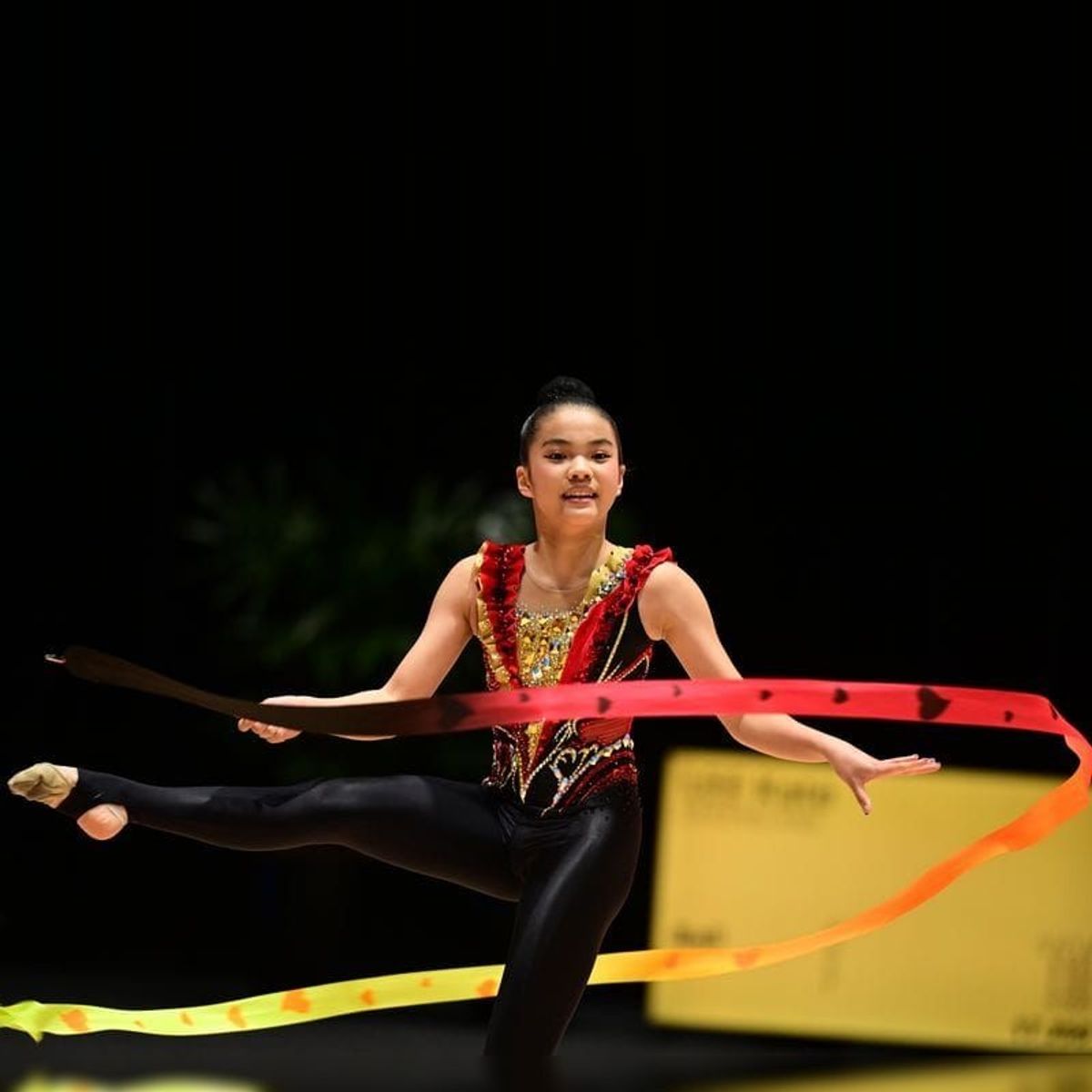
Rhythmic gymnast performing with a ribbon

Ribbon

StickLength: 50 cm to 60 cm. Diameter: max 1 cm. Material: wood, plastic or fibreglass. The swivel should not exceed 7 cm in length. Colours: any colour except gold and silver.

RibbonLength: up to 6 metres long, depending on gymnast level. Levels 3–6, Stages, Pre & Sub-junior: minimum 4 metres. Levels 7–9, Junior and Senior International: minimum 5 metres. Width: 4 cm to 6 cm. Weight: about 35 g. Material: satin or a non-starched derivative. Colours: any colour.

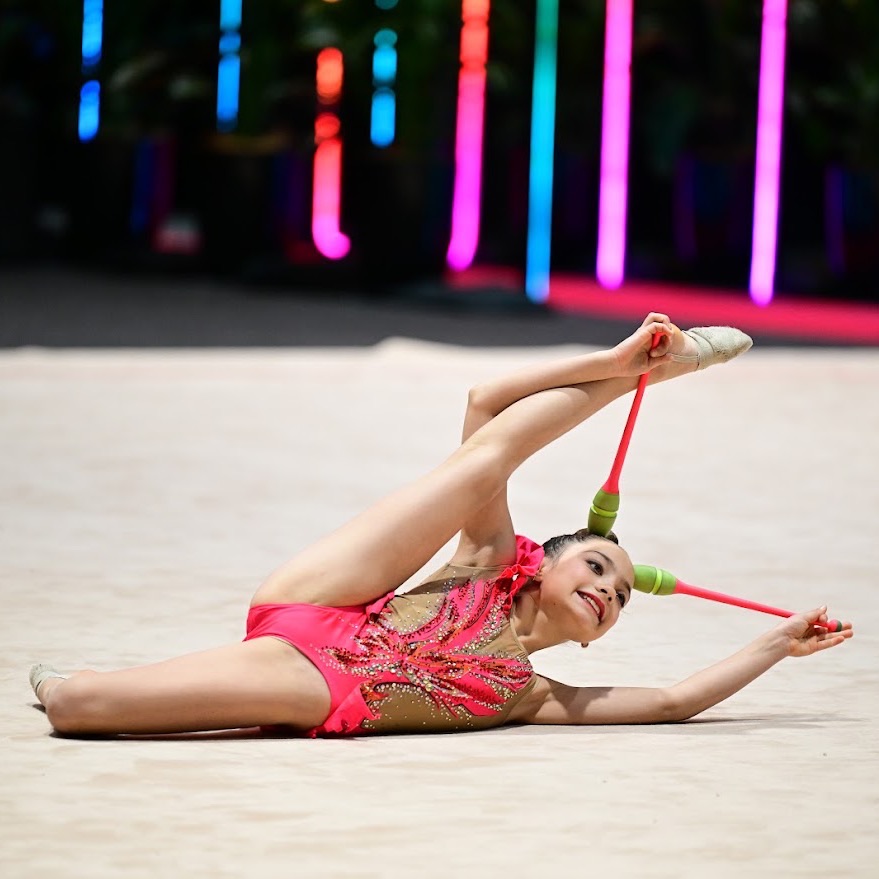
Rhythmic gymnast performing with clubs

Clubs

Length: 36–50 cm. Generally, clubs will measure from the fingertips to just past the elbow of a gymnast. Weight depends on gymnast level. Levels 3–6, Stages, Pre & Sub-junior: size to suit the gymnast. Levels 7–9, Junior and Senior International: clubs must be between 40–50 cm and weigh at least 150 grams each. Material: wood, plastic or rubber. Colours: any colour; both clubs can be different colours.

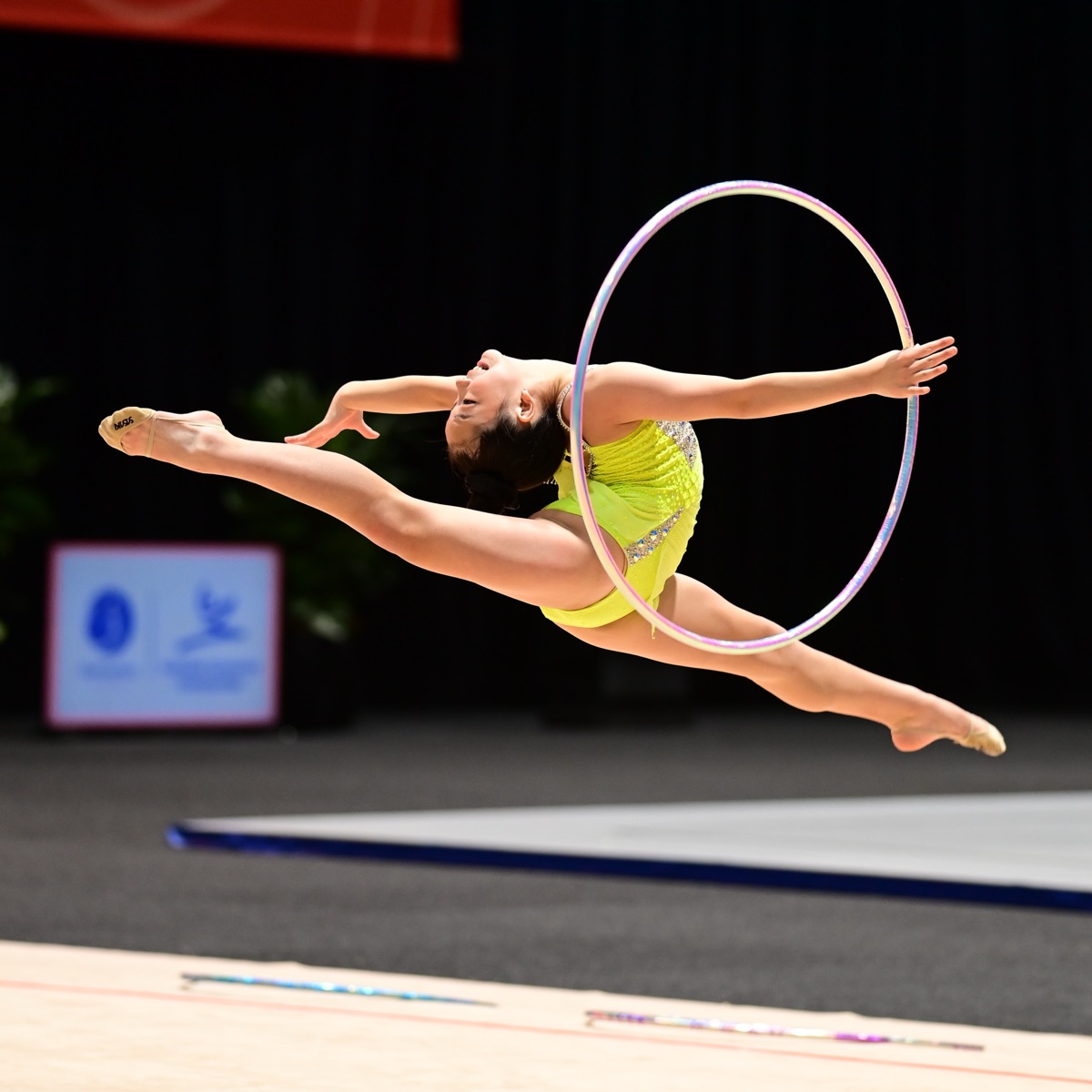
Rhythmic gymnast performing with a hoop

Hoop

Size: diameter 65 cm to 90 cm at the inside. It should be relative to the size of the gymnast — i.e. the diameter of the hoop when held against the body should be at least at the gymnast's hip. Weight: at least 300 grams. Material: wood or plastic, hollow or solid. Colours: any colour.

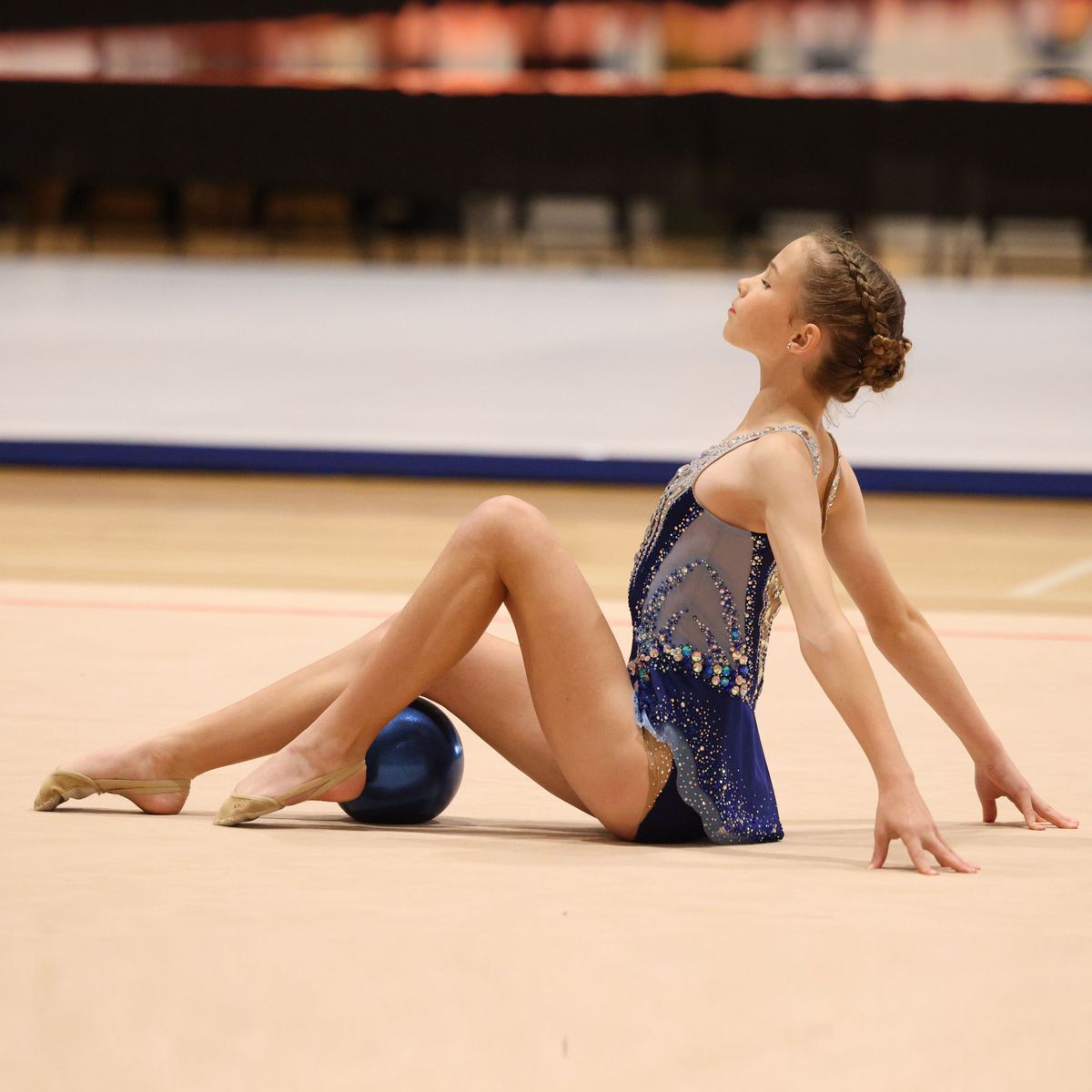
Rhythmic gymnast performing with a ball

Ball

Diameter: 15 cm to 20 cm. It should rest comfortably in the palm of the hand. Weight depends on gymnast level. Levels 3–6, Stages, Pre & Sub-junior: size to suit the gymnast. Levels 7–9, Junior and Senior International: ball needs to measure between 16–20 cm diameter and weigh between 300–400 grams. Material: rubber or plastic. Colours: any colour.

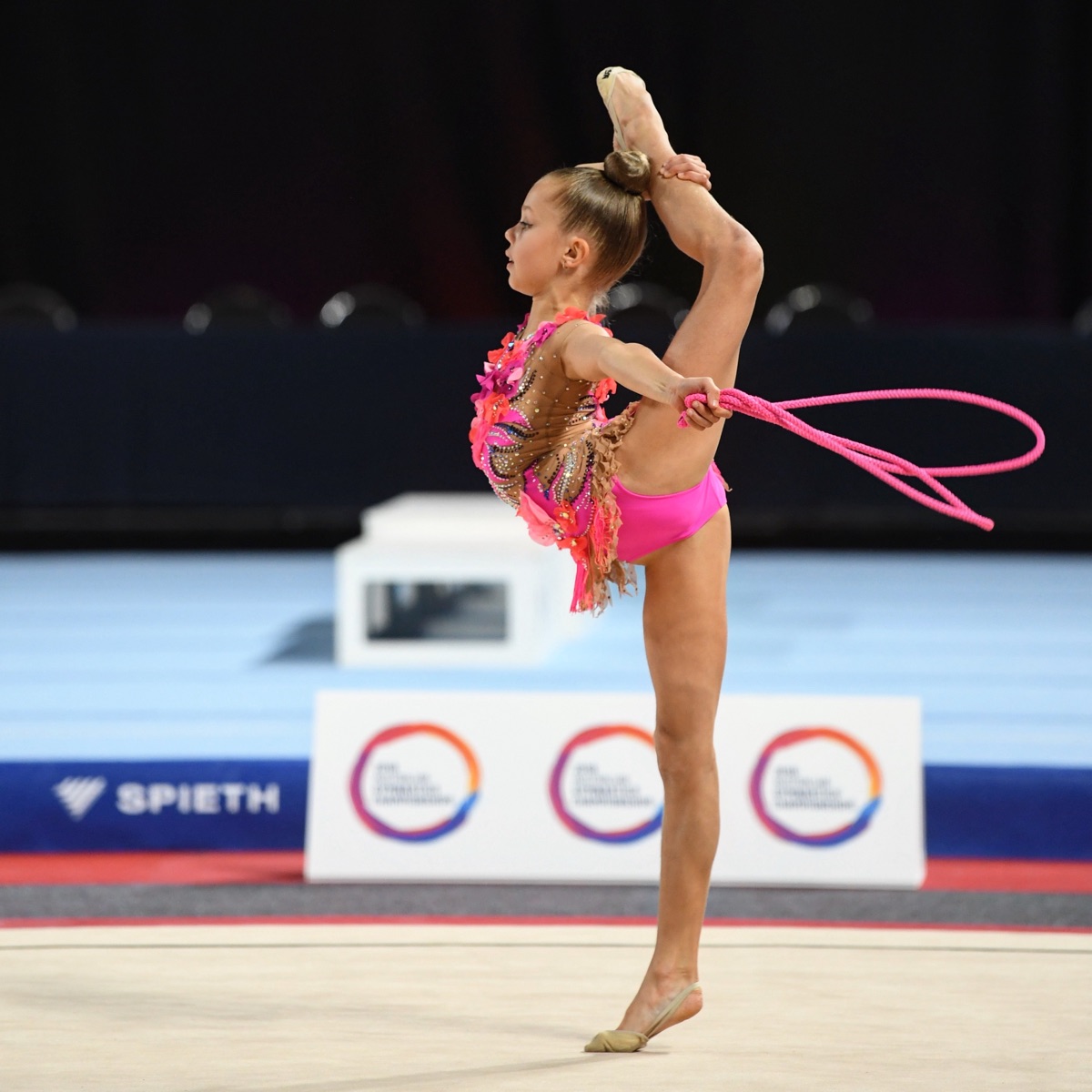
Rhythmic gymnast performing with a rope

Rope

Material: the rope is made of a supple, firm material with a thickness of 8–10 mm. Size: the rope should fit the size of the gymnast — i.e. with the gymnast standing on the middle of the rope, the ends should reach between her underarms and her shoulders. Colours: any colour.

Useful links

Rules, calendars and reading